I. Historical Evolution: The Glorious Journey of a Millennium-Old Capital
Datong, an ancient city with over 2,000 years of human civilization, has long been hailed as “the capital of three dynasties and a strategic stronghold of two eras.” From the capital of the Northern Wei dynasty to the secondary capital of the Liao and Jin dynasties, from a key military outpost during the Ming and Qing dynasties to a modern energy hub, it embodies profound historical depth and unique cultural charm.
Early Development and Fortresses of the Han Dynasties
Human activity in the Datong region dates back over 2,000 years. During the Han dynasties, this area served as a vital military stronghold and transportation hub, bearing the crucial mission of guarding the Central Plains and connecting the frontier regions.
The Capital of Northern Wei: The Pingcheng Era
In 398 AD, Emperor Daowu of Northern Wei, Tuoba Gui, relocated the capital from Shengle to Pingcheng (present-day Datong), ushering in the nearly century-long Pingcheng era. This historic move marked Datong's formal emergence as the political and cultural center of northern China.
Major Achievements:
- The rise and spread of Buddhist culture
- Deep integration of Hu and Han cultures
- Significant innovations in urban planning, particularly the implementation of the “Li-fang System”
- A pivotal hub for East-West cultural exchange
Liao and Jin Secondary Capitals: A Melting Pot of Cultures
Following the Northern Wei dynasty, both the Liao and Jin dynasties successively designated Datong as their secondary capital, further cementing its pivotal role in the northern political landscape. During this era, Datong emerged as a vital stage for the cultural integration of Han Chinese and ethnic minority groups, giving rise to a distinctive multi-ethnic cultural character.
A Strategic Stronghold of the Ming and Qing Dynasties: Commercial Prosperity
During the Ming and Qing periods, Datong leveraged its pivotal geographical position to emerge as a major commercial hub and military stronghold in northern China. Merchants flocked to the city, fostering cultural flourishing and infusing new vitality into this ancient capital.
Early Development and Fortresses of the Han Dynasties
Human activity in the Datong region dates back over 2,000 years. During the Han dynasties, this area served as a vital military stronghold and transportation hub, bearing the crucial mission of guarding the Central Plains and connecting the frontier regions.
The Capital of Northern Wei: The Pingcheng Era
In 398 AD, Emperor Daowu of Northern Wei, Tuoba Gui, relocated the capital from Shengle to Pingcheng (present-day Datong), ushering in the nearly century-long Pingcheng era. This historic move marked Datong's formal emergence as the political and cultural center of northern China.
Major Achievements:
- The rise and spread of Buddhist culture
- Deep integration of Hu and Han cultures
- Significant innovations in urban planning, particularly the implementation of the “Li-fang System”
- A pivotal hub for East-West cultural exchange
Liao and Jin Secondary Capitals: A Melting Pot of Cultures
Following the Northern Wei dynasty, both the Liao and Jin dynasties successively designated Datong as their secondary capital, further cementing its pivotal role in the northern political landscape. During this era, Datong emerged as a vital stage for the cultural integration of Han Chinese and ethnic minority groups, giving rise to a distinctive multi-ethnic cultural character.
A Strategic Stronghold of the Ming and Qing Dynasties: Commercial Prosperity
During the Ming and Qing periods, Datong leveraged its pivotal geographical position to emerge as a major commercial hub and military stronghold in northern China. Merchants flocked to the city, fostering cultural flourishing and infusing new vitality into this ancient capital.
II. Cultural Depth: A City Embracing Diversity
A Paradigm of Multicultural Integration
Datong's most distinctive cultural trait lies in the profound fusion of Hu and Han cultures. It is not only a bastion of Han Chinese heritage but also a melting pot of ethnic minority cultures, fostering a cultural landscape where “you are in me, and I am in you.”
Rich Cultural Heritage
The Pingcheng Ruins of the Northern Wei Dynasty, a crucial testament to ancient “li-fang” urban planning, alongside the Yungang Grottoes 15 kilometers away, form Datong's most significant historical and cultural heritage cluster.
Profound Cultural Significance
- Buddhist Culture: Buddhist art treasures like the Yungang Grottoes
- Military Culture: Great Wall heritage and frontier defense traditions
- Folk Culture: Traditional crafts and ethnic customs
- Modern Culture: Industrial heritage culture, digital culture
Urban Ethos
Seventy years ago, scholars including Liang Sicheng proposed the “One Axis, Two Cities” concept. In the new century, Datong City built upon this foundation to introduce the development philosophy of “blending ancient and modern,” embodying the city's spirit of embracing diversity and embracing innovation.
III. Tourism Resources: World-Class Cultural Heritage and Natural Wonders
Datong boasts abundant tourism resources, ranging from UNESCO World Heritage sites to national scenic areas, and from historic architectural complexes to distinctive tourist attractions, forming a diverse tourism product system.
【Ancient City】Datong Ancient City: A Thousand-Year Legacy of History
The majestic ancient city walls of Datong bear witness to a thousand years of historical vicissitudes
Historical Value and Architectural Features
The ancient city walls of Datong stand as a quintessential example of Ming Dynasty fortification architecture, perfectly showcasing ancient military defensive wisdom. With a circumference of 7.24 kilometers, a height of 14 meters, a top width of 12 meters, and a base width of 18 meters, it stands as one of China's most intact surviving ancient city wall structures.
Military Defense Wisdom
The ancient city wall employs a “li-fang system” layout, featuring a complete defensive system including city gates, corner towers, and watchtowers, showcasing the exquisite craftsmanship of ancient military architecture.
Architectural Art Treasure
The city walls embody the essence of Ming Dynasty architectural art, reflecting the ancient Chinese planning principle of “central axis symmetry and clear hierarchy.”
Historical and Cultural Repository
The ancient city preserves numerous historic architectural complexes and cultural relics, serving as vital physical evidence for studying the development of ancient Chinese urban civilization.
Modern Preservation and Development
Datong City places high importance on the preservation and development of the ancient city walls. Through scientific planning and meticulous restoration, this millennium-old city has been revitalized, emerging as a significant cultural tourism destination.

【World Heritage】Yungang Grottoes
As a UNESCO World Heritage Site, the Yungang Grottoes stand as a renowned treasure trove of Chinese Buddhist cave art, representing the pinnacle of Chinese Buddhist artistic achievement from the 5th to 6th centuries AD.
Scale Data: Preserves 254 caves and niches of varying sizes, including 45 major caves, housing over 59,000 statues.
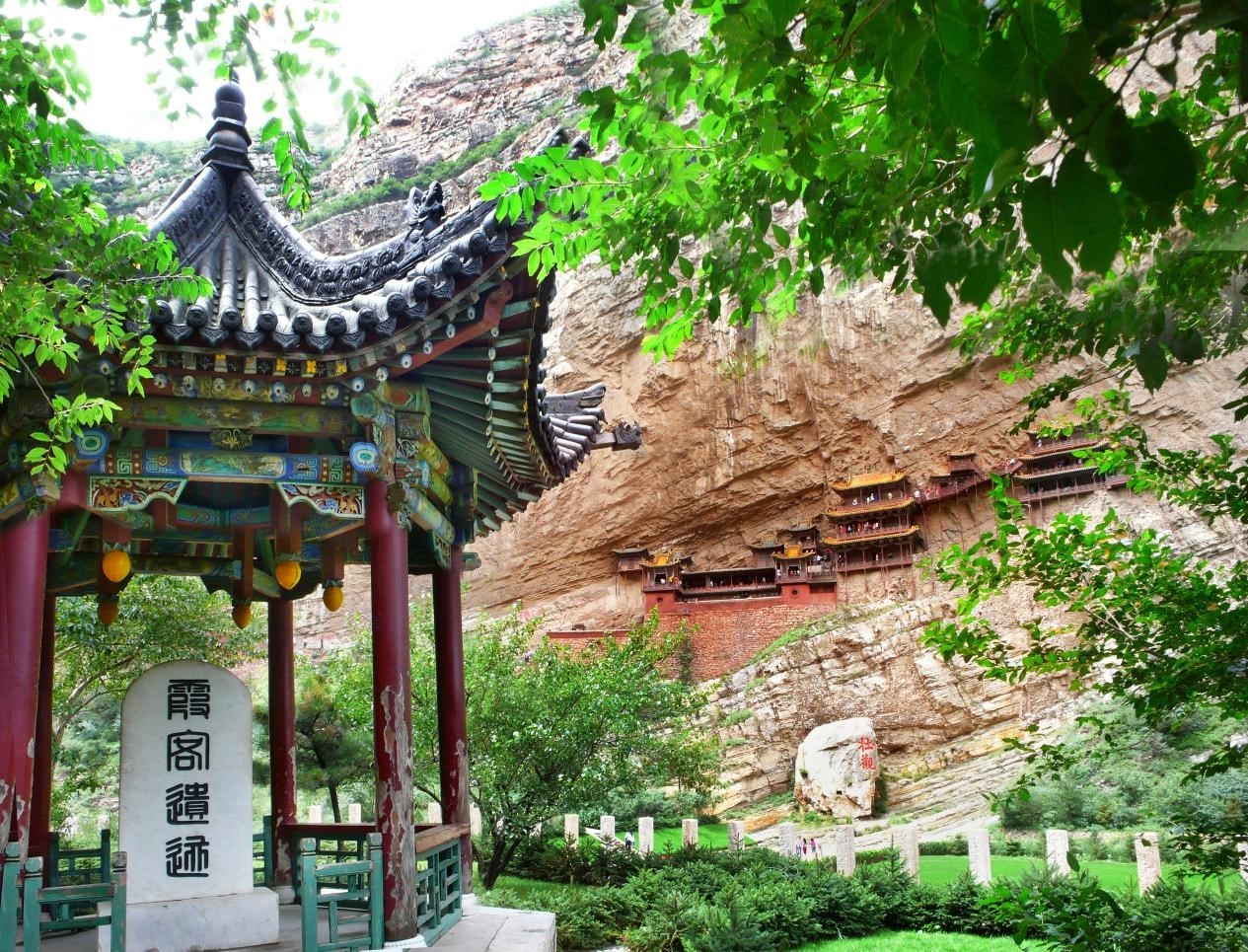
【National Scenic Area】Mount Heng
As one of the Five Great Mountains—the Northern Peak—Mount Heng is a renowned Taoist sacred site in China, boasting rich natural and cultural landscapes.
Key Highlights: Its main peak stands at 2,016.8 meters above sea level, earning it the title “The First Mountain Beyond the Great Wall.”

【Ancient Architectural Complex】Historical Building Ensembles
Huayan Temple: A complex of ancient buildings from the Liao and Jin dynasties, showcasing the architectural artistry of those eras
Shanhua Temple: A representative masterpiece of ancient Liao and Jin architecture
Hunyuan Prefectural Office: A quintessential example of ancient government office architecture
Classification of Featured Tourist Attractions
Datong City boasts 37 A-rated tourist attractions, forming a diversified tourism product system:
Red Tourism
Red education bases including the Pingxingguan Victory Memorial Hall and the Datong Coal Mine Mass Grave Memorial Site
Industrial Tourism
Jinhuagong Underground Exploration Tour: A prime example of coal mining industrial tourism
Ecotourism
Datong Sanggan River National Wetland Park, Datong Volcanic Group Scenic Area, Earth Forest Ecotourism Scenic Area, etc.
Cultural Experiences
Guangling Paper-Cutting Art Museum, Astragalus Cultural Park, and other distinctive cultural venues
Themed Tour Routes
Datong City has meticulously planned several distinctive tour routes:
- Zuoyun Frontier Pastoral Journey: Experience frontier culture and pastoral landscapes
- Tianzhen Great Wall Adventure: Explore Great Wall heritage and frontier traditions
- Yanggao Cultural Heritage · Frontier Charm Tour: Savor historical culture and folk traditions
- Guangling Ancient Charm · Intangible Heritage Art Tour: Discover traditional crafts and intangible cultural heritage
- Guangling Secluded Valley · Ecological Wellness Tour: Enjoy natural ecosystems and wellness leisure
IV. Modern Development: The Remarkable Transformation from “Coal Capital” to “Computing Power Hub”
18 million
kilowatts of new energy installed capacity target
Top three nationally
city computing power sub-index
5 billion yuan
Annual output value of industrial clusters
37
Grade A tourist attractions
Traditional Energy Advantages
Da Tong, known as “China's Coal Capital,” possesses high-quality coal resources and a century-old coal-to-power industrial chain, providing a robust power foundation for the digital economy sector.
Emerging Industry Development
In recent years, Datong has deepened its focus on the energy sector, seizing strategic opportunities presented by the “East Data, West Computing” initiative. The city is actively cultivating new productive forces in data services and energy, driving Datong's transformation from “exporting coal and electricity” to “exporting computing power and services.”
Goals for Building the “Three Major Cities”
Energy City
Over the next three years, new energy installations will reach 18 million kilowatts, gradually establishing a new energy system primarily supplied by non-fossil sources.
Computing Power City
Ranked among China's top three in urban computing power sub-index, accelerating development of the Taihang Mountain Computing Power Hub encircling Beijing
City of Culture
Deeply exploring historical and cultural heritage, promoting integrated cultural and tourism development, building a gateway city for tourism hotspots
Development of New Quality Productive Forces
By 2025, Datong City, Shanxi will focus on four key tracks, coordinating technological innovation and industrial upgrading:
- Energy Technology Innovation Track
- Digital Computing Power Development Track
- Cultural Tourism Integration Track
- Ecological Civilization Construction Track
V. Urban Development and Infrastructure
Cultural Facility Development
Datong Museum: National first-class museum, established in 1958 and opened in 1959
Datong Library: Advanced information dissemination and community cultural functions
Datong Art Museum: Established in January 2021, officially opened to the public on September 1, 2021
Sports Facilities
The Datong Sports Center features four venues with a combined capacity of 40,000 spectators (30,000-seat stadium, 8,000-seat gymnasium, 2,000-seat swimming hall), providing high-quality sports services for residents and visitors.
Transportation Network
During the 14th Five-Year Plan period, Datong City achieved significant accomplishments in transportation infrastructure development, establishing a convenient transportation network that provides robust support for tourism and economic growth.
VI. New Models for Cultural and Tourism Integration
Policy Support
Datong City has formulated a series of policy documents supporting cultural and tourism development:
- Work Plan for Building Datong into a Tourism Hub City
- Implementation Rules for Supporting High-Quality Development of Small Theater Performances in Datong City
- Implementation Plan for the 2025 Free Rural Theater Outreach Program in Datong City
Public Benefit Projects
The 2025 Free Rural Theater Tour Public Benefit Project extends cultural achievements to more citizens, enhancing the coverage and influence of cultural services.
Digital Cultural Tourism
Datong City actively promotes digital cultural tourism development, leveraging new technologies like big data and cloud computing to enhance tourism service quality and visitor experiences.
Tourism
Multiple rural tourism routes have been planned to promote coordinated urban-rural tourism development and support the implementation of the rural revitalization strategy.
VII. Future Development Outlook
Economic Development Goals
Datong City's economic efforts will anchor to the overarching goal of “entering the first tier,” steadily advancing trans-formative development to secure a more prominent position within Shanxi's and even China's broader development landscape.
Industrial Transformation and Upgrading
Digital Transformation of Traditional Industries
Promoting the digital and intelligent transformation of traditional industries like coal and power
ew Industries Cultivation
Prioritizing the development of emerging sectors such as data services, artificial intelligence, and new energy
ervice Industry Upgrading
Elevate the development level of service industries including cultural tourism, modern logistics, and e-commerce
Major Strategic Initiatives
Datong City is deeply implementing the major strategy of “Integrating into the Beijing-Tianjin-Hebei Region and Building a Bridgehead,” accelerating the construction of a modern industrial system with Datong characteristics. It aims to achieve complementary advantages in industrial transfer, technological innovation, and talent exchange.
Ecological Environment
Adhering to green development principles, we advance ecological civilization construction to build a beautiful Datong, achieving a virtuous cycle between economic growth and environmental protection.