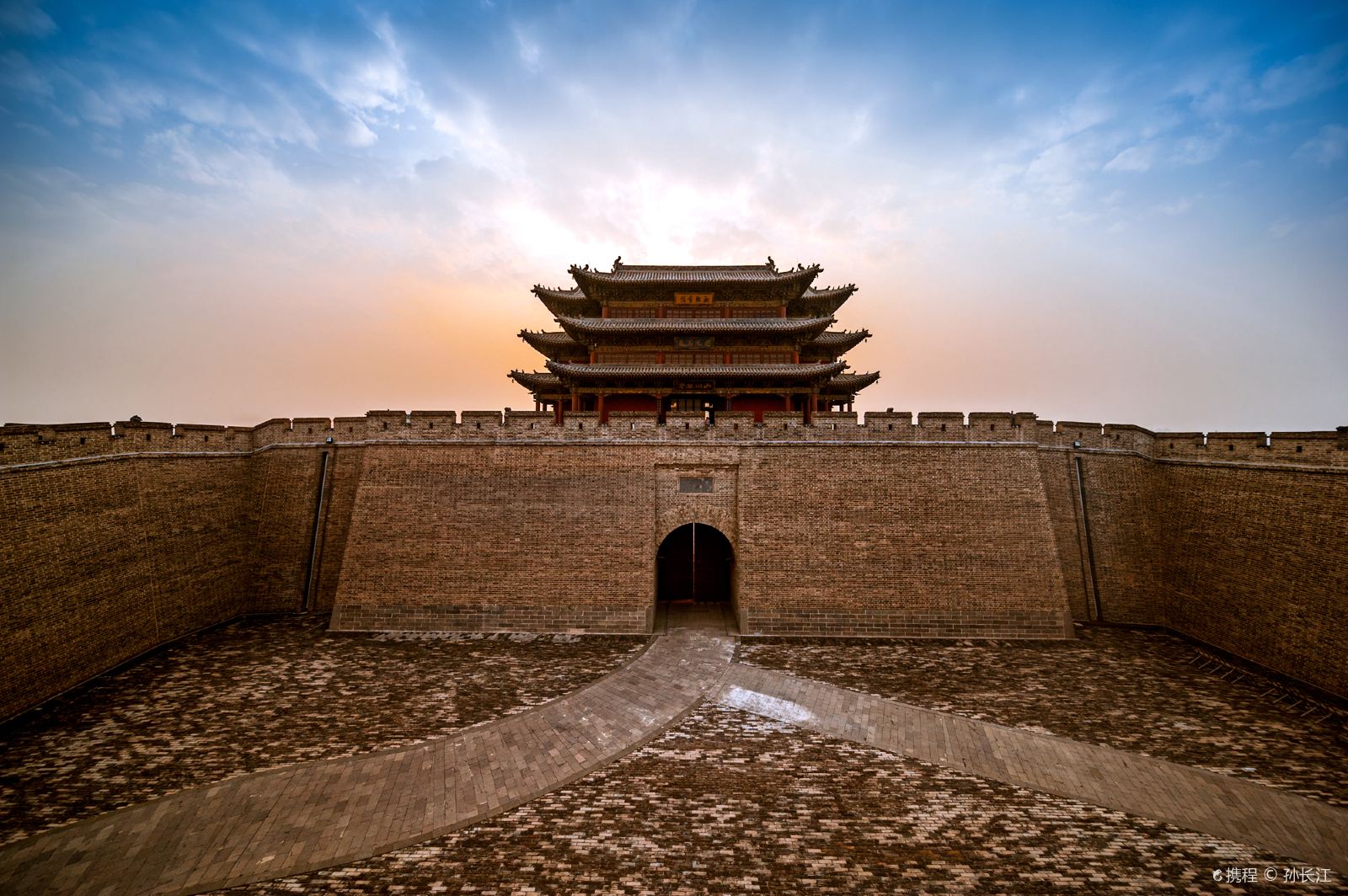
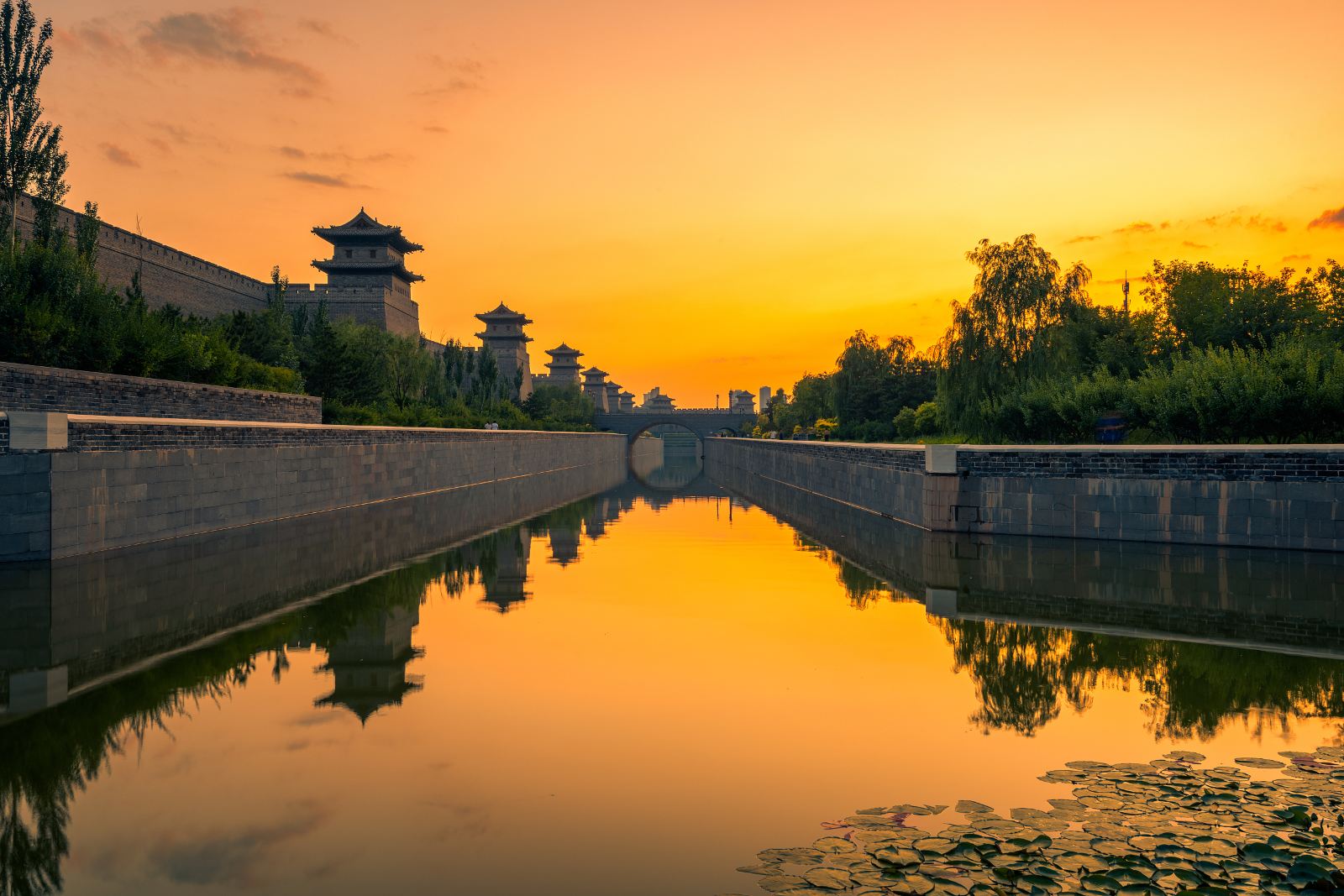

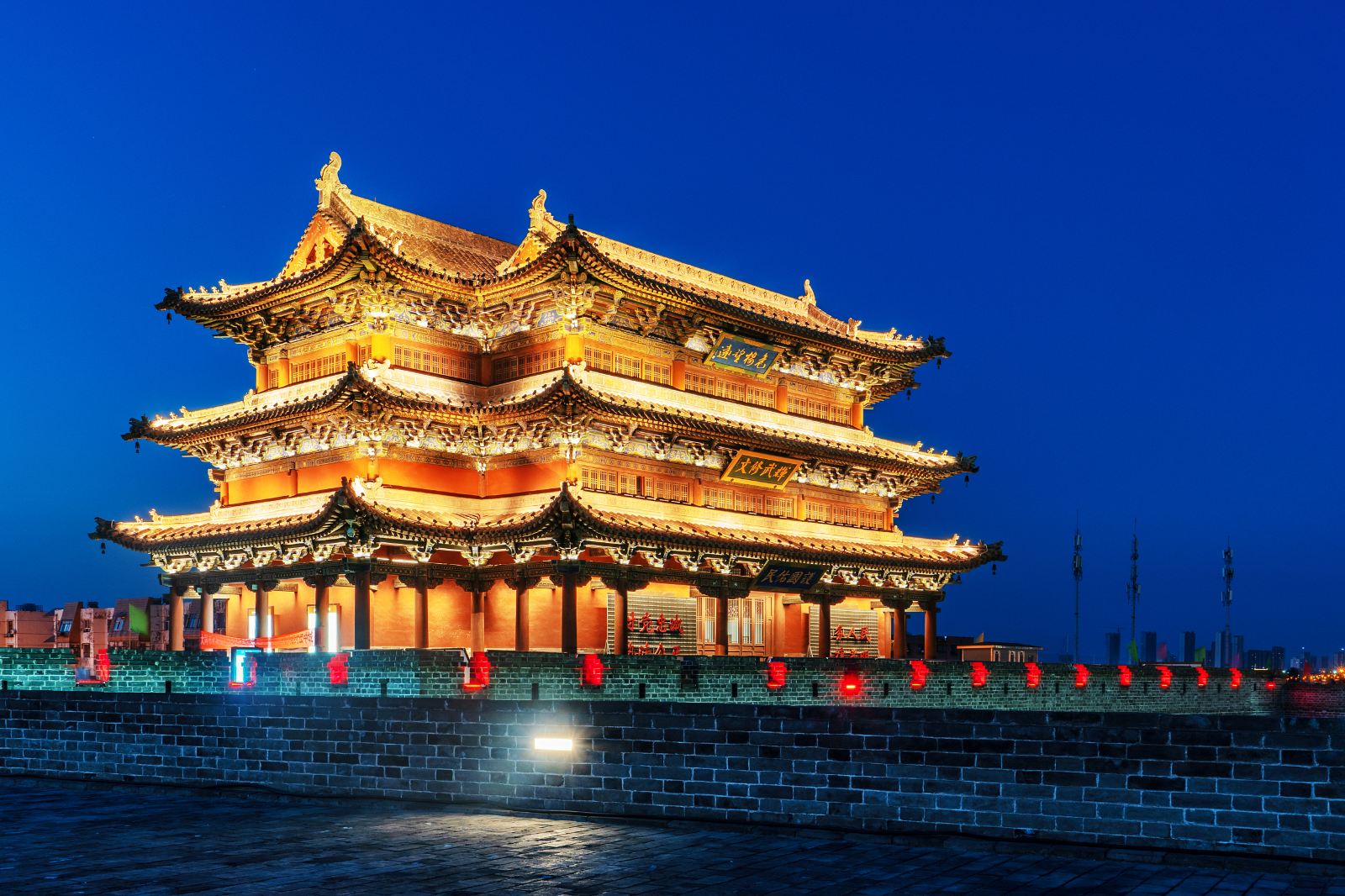


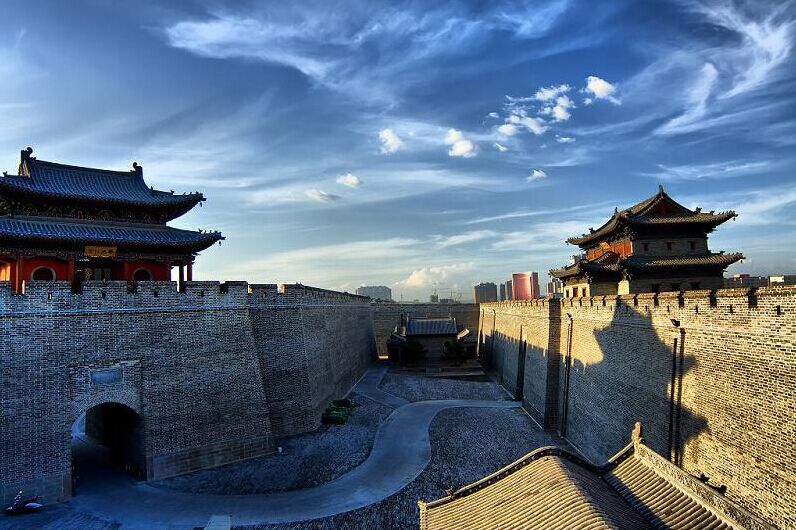
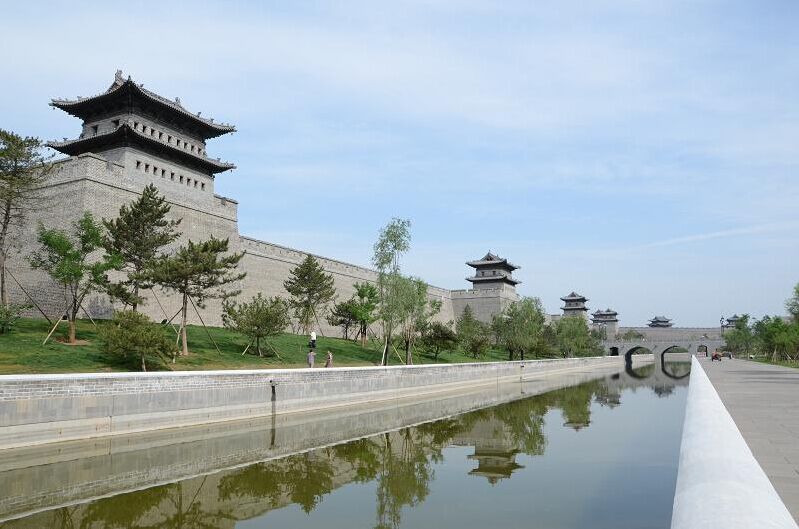
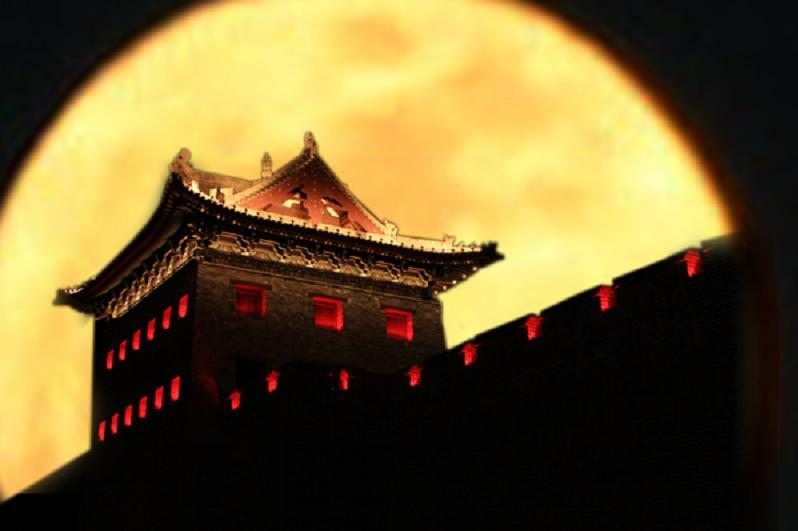
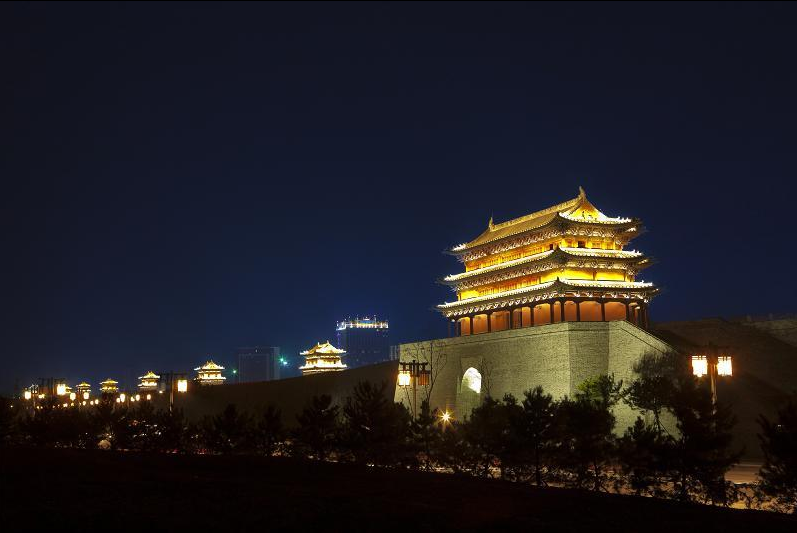
The ancient city walls are situated in Pingcheng District, Datong City. As the wall ruins remain distinctly visible, they are still marked on the vast majority of modern maps of Datong. The history of fortified settlements in Datong is remarkably long-standing. The extant main city walls were constructed in the fifth year of the Hongwu era (1372) by General Xu Da, building upon the foundations of earthen fortifications from the Northern Wei, Tang, Liao, Jin, and Yuan dynasties. This formed the Datong town fortress as it is seen today. The final completed town walls of Datong formed a roughly square shape, with sides measuring 1.5 kilometres and 1.75 kilometres respectively. The total perimeter was 6.5 kilometres, enclosing an area of 2.63 square kilometres. Constructed upon a foundation of massive dressed stone blocks, the walls featured a core of rammed earth mixed with sand and gravel, encased in a facing of blue bricks each weighing 17 jin (approximately 8.5 kilograms). The walls stood 14 metres high. The parapet walls featured brick crenellations measuring 5 metres in length, 0.8 metres in height, and 0.5 metres in thickness, spaced 0.5 metres apart. A total of 580 pairs of crenellations were constructed, said to represent the number of villages under Datong's jurisdiction at the time. The town walls featured four gates: the East Gate (Heyangmen), South Gate (Yongtaimen), West Gate (Qingyuamen), and North Gate (Wudingmen). Each gate was flanked by a barbican, with the southern section of the eastern wall (viewed from the north) extending 1,800 metres. The barbican walls stretched 700 metres, incorporating a gate tower, an arrow tower, a moon tower, twelve watchtowers, two corner towers, and two command platforms. Under Xu Da's meticulous planning and rigorous supervision, Datong's fortifications reached unprecedented architectural refinement: four main thoroughfares, eight minor lanes, and seventy-two winding alleys formed a grid of orderly, accessible streets. At each central crossroads stood a tower: the Peace Tower to the east, the Drum Tower to the south, the Bell Tower to the west, and the Star of Literature Tower to the north. At the city's centre stood four exquisite memorial arches, collectively known as the Four Memorial Arches.