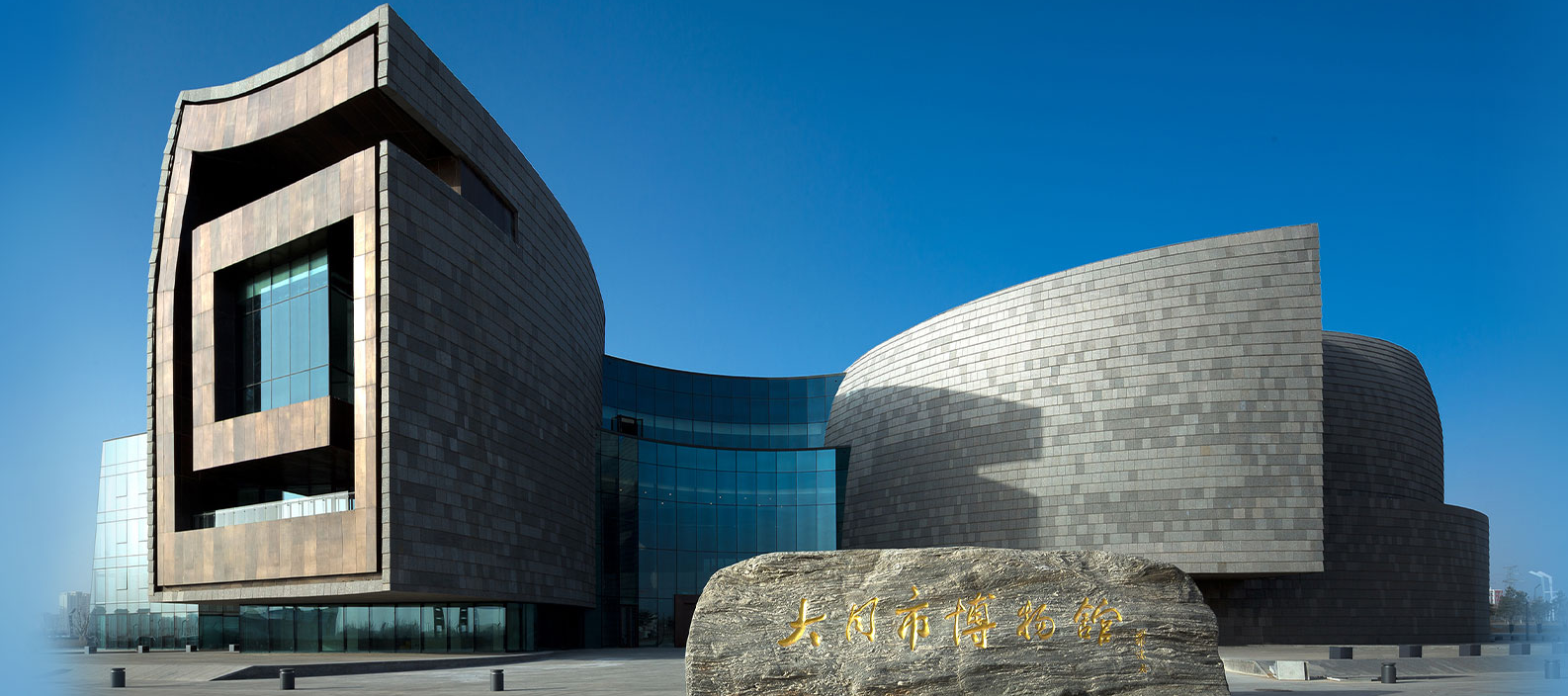
Datong Museum is a comprehensive regional museum, currently designated as a National Class I Museum. Its establishment commenced in 1958, with the institution formally opening to the public in 1959 under the name Datong City Cultural Relics Exhibition Hall. It was renamed Datong Museum in 1963. The current site is located on Taihe Road in Pingcheng District, covering an area of 51,556 square metres with a building footprint of 32,821 square metres. As the largest museum in northern Shanxi, it reopened to the public on 31st December 2014. The architectural exterior draws inspiration from natural and cultural elements such as volcanoes, dragon walls, and the Yungang Grottoes, crystallising into an intertwined double-S form. Resembling a dragon poised for flight, it also symbolises the fusion of Hu and Han cultures.
The museum's collection comprises over 170,000 artefacts, including more than 3,000 precious items. Renowned for showcasing the cultural characteristics of northern ethnic minorities, frontier strongholds, and religious traditions, the holdings vividly illustrate Datong's fusion heritage. Particularly celebrated are the exquisite artefacts from the Northern Wei, Liao, and Jin dynasties.
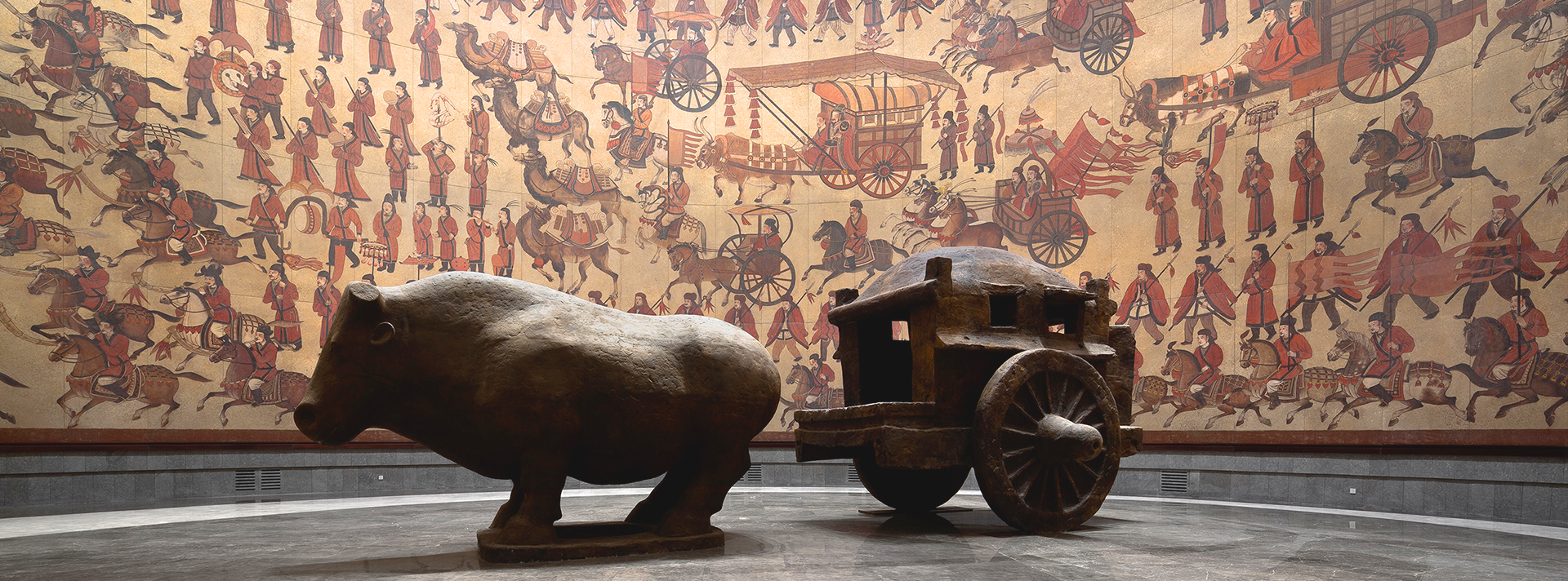
As a region where the Han Chinese and ethnic minorities converge, Datong has been a melting pot of diverse cultures since King Wuling of Zhao introduced Hu-style clothing and mounted archery. This legacy continued through the Northern Wei dynasty when the Tuoba Xianbei established their capital at Pingcheng, and persisted throughout the Liao, Jin, Yuan, Ming, and Qing periods. As a local museum, Datong Museum remains steadfast in its commitment to promoting China's outstanding traditional culture and fostering core socialist values. The main gallery centres on Datong's distinctive historical and cultural geography, highlighting the region's journey of ethnic integration. It features four historical exhibitions: ‘The Changing Fortunes of Dai Region’, ‘Pingcheng under Northern Wei’, ‘Western Capital under Liao and Jin’, and ‘A Strategic Stronghold in Ming and Qing’. These showcase the political, economic, military, and cultural prosperity that emerged, recreating scenes of harmonious coexistence where diverse ethnic groups lived together, mutually enriched each other, and thrived in unity. This fully embodies the regional cultural expression of ethnic integration.
Additionally, it hosts two thematic exhibitions: ‘Datong Dinosaurs’ and ‘The Pure Sounds of Sanskrit’. Two temporary exhibition halls are dedicated to introducing multiple domestic and international exhibitions annually, enhancing international exchange and cooperation while showcasing the rich diversity of regional cultures. The museum actively implements a curator system, striving to develop original exhibitions and explore the creation of high-quality displays. Exhibitions launched internationally include the Northern Wei-themed exhibition The Path of Integration: The Migration and Development of the Tuoba Xianbei (a joint exhibition), the Liao-Jin-Yuan-themed exhibition Traces of Xijing: Cultural Artefacts from Datong's Liao, Jin and Yuan Dynasties, and the African art exhibition Spirits in Wood: African Wood Carving Art. These exhibitions tour both domestically and internationally, promoting Datong's historical regional culture and celebrating global multiculturalism.

Currently, Datong Museum operates under a ‘central and branch museum system’. In addition to the main museum, nine branch museums are now open to the public: the Liang Sicheng Memorial Hall, the Pingcheng Memory Museum, the Mingtang Ruins Museum, the Kuixing Culture Museum, the Northern Dynasties Museum, the Liao-Jin-Yuan Ethnic Integration Museum, the Datong Red Memory Museum, the Ancient Bronze Art Museum, and the Memorial Hall of Zhang Aitang, Wei Stele Calligrapher. Guided by the central museum's overarching theme of ‘integration’, each branch museum maintains its distinct thematic focus and unique characteristics while remaining interconnected and mutually complementary. Moving forward, we shall further explore exhibitions on diverse subjects to narrate Datong's complete historical narrative, supplement unfinished historical accounts, enhance public cultural identity, and strengthen cultural confidence among our citizens.