Overview of Datong Sports Centre
I. Basic Information
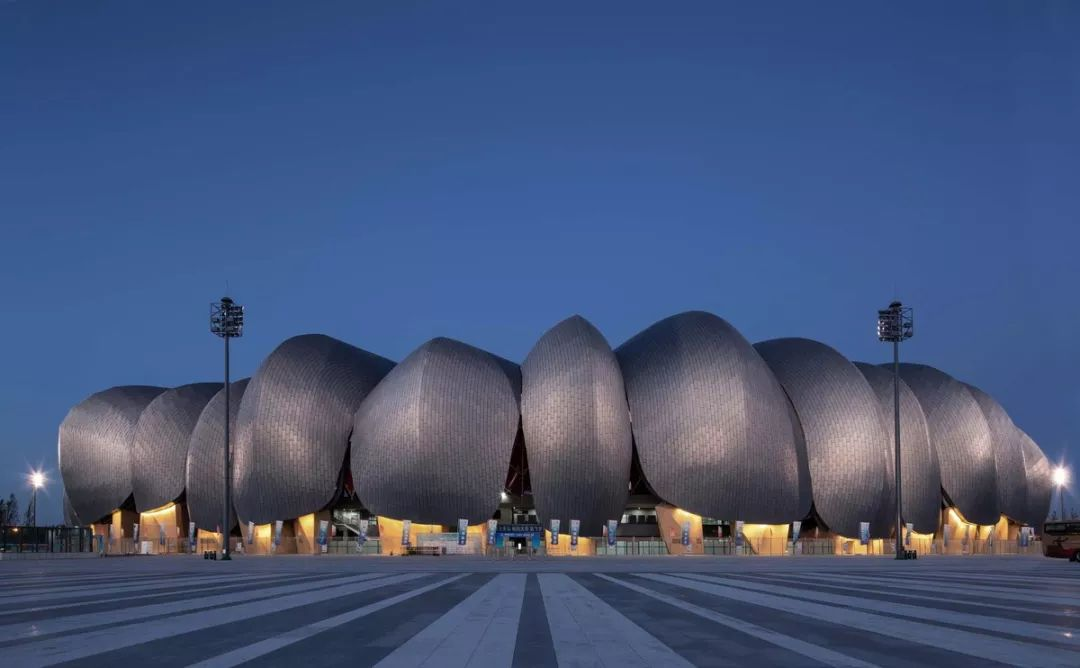
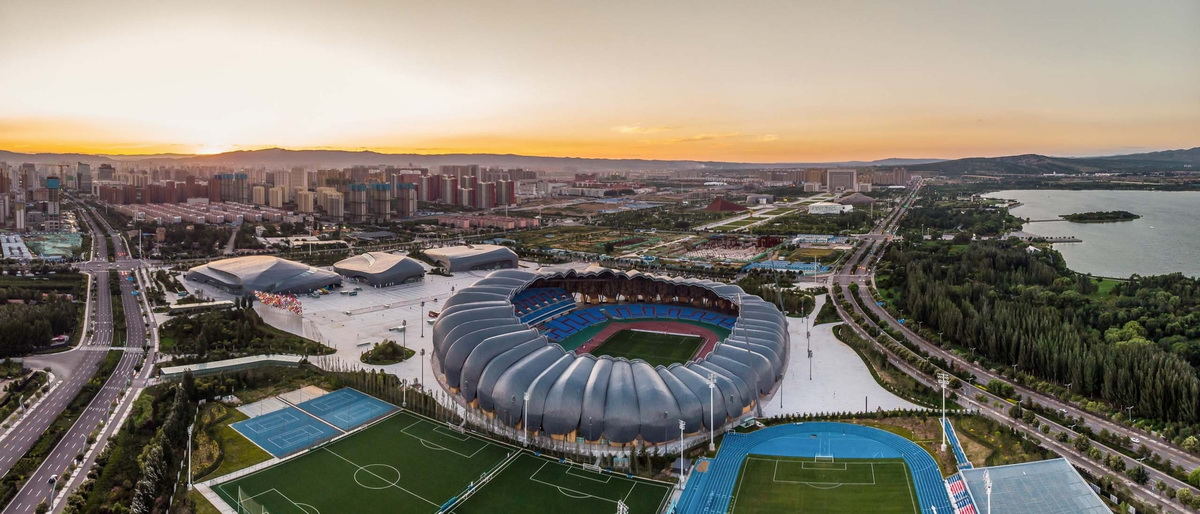
The Datong Sports Centre is situated in the Yudong Central District of Datong City, adjacent to Wenyin Lake. Designed collaboratively by Australian firm POPULOUS Andrew and China Construction (Beijing) International Design Consultants Co., Ltd., construction commenced on 6 September 2010. In 2017, Beijing Construction Engineering Group assumed responsibility for the continuation of the project, upholding the duties expected of a state-owned enterprise. The project occupies a site area of 646 mu (approximately 43 hectares), with a total floor area of 101,700 square metres. It comprises four main structures: a stadium, an indoor sports arena, a swimming complex, and a multi-purpose training hall. The complex can accommodate 40,000 spectators simultaneously, with seating capacity of approximately 30,000 for the stadium, 8,000 for the indoor arena, and 2,000 for the swimming complex. Following its handover in April 2019, the complex has hosted major events including the men's basketball and football competitions of the 2019 Second National Youth Games, the 5th Jackie Chan International Action Film Week, the 2019 Provincial and Municipal Friendship Cities Table Tennis Invitational Tournament, and numerous provincial-level single-sport championships in recent years. It will also stage the opening ceremony and ten competitive sports events for the 16th Shanxi Provincial Games in 2023. See Figure 1 for the rendering.
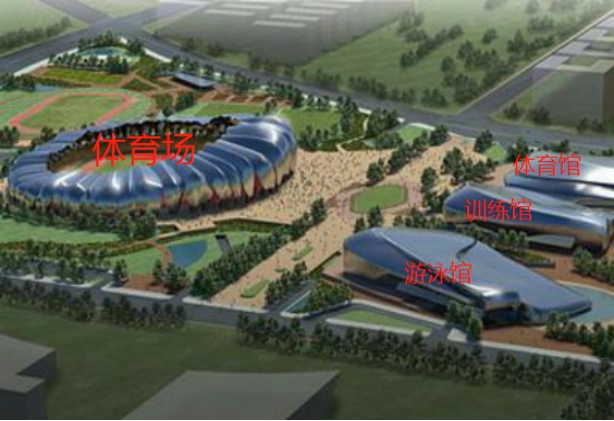
Figure 1 Sports Centre Plan Rendering
(I) Stadium:
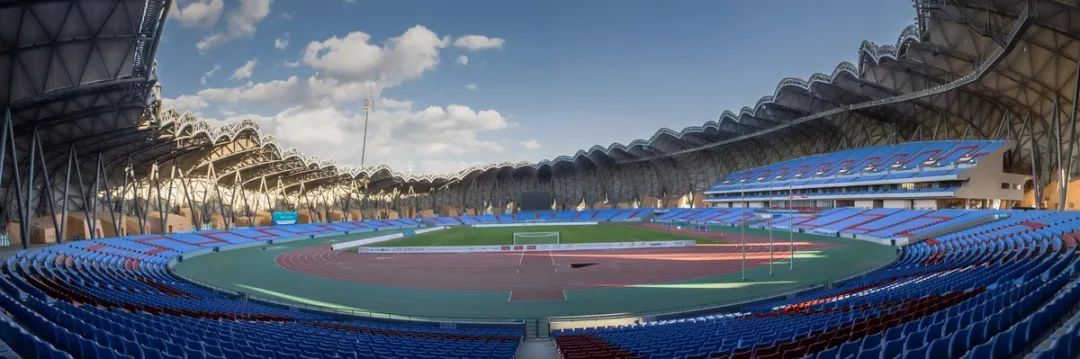
The stadium has a floor area of 41,075 square metres and a building height of approximately 43.8 metres. It provides a total seating capacity of 29,284, comprising:
- 28,307 fixed standard seats (11 upper-tier sections with 6,735 seats; 46 lower-tier sections with 21,514 seats; 58 accessible companion seats) 146 VIP seats, 773 box seats, and 58 accessible seats. The venue can accommodate 30,000 spectators for performances and sporting events. The stadium's overall outline forms an irregular oval, with a major axis of approximately 285 metres and a minor axis of approximately 230 metres. It comprises four main levels: The first level serves as the platform tier, housing the main spectator entrance and lower tier stands. The second level accommodates officials and sports school facilities, including boxes and technical rooms, which may function as sports school classrooms during non-competition periods. The third level comprises the upper tier stands, featuring semi-open spectator concourses and spectator amenities. Refer to Figure 2 for the stadium's plan view.
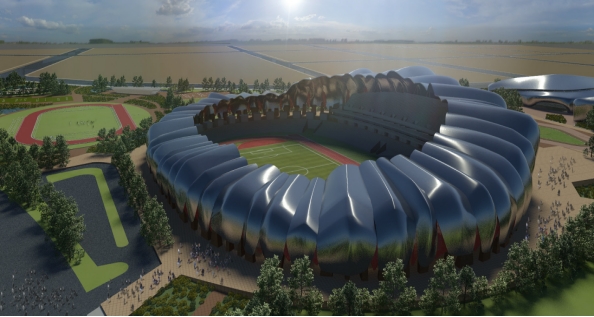
Figure 2 Stadium Plan Rendering
The sports competition venues comprise a standard athletics track and a standard football pitch. The training ground consists of a single standard athletics track.
The stadium stands feature a concrete frame structure, while the steel canopy employs a single-layer folded-surface network structure. This canopy is formed from 51 distinct ‘leaf-like’ elements varying in size and shape. An underground car park spanning 13,000 square metres significantly alleviates parking constraints.
(II) Sports Hall:
The sports hall's architectural form embodies the concepts of athletic strength and graceful dynamism. With a total floor area of 22,951m² and a building height of approximately 29.26m, it comprises one basement level, two above-ground levels, and partial third-level sections. Total seating capacity is 7,577: 5,216 fixed standard seats, 180 fixed VIP seats, with 2,048 movable seats, plus 34 accessible seats and 34 companion seats. The metal roof structure is divided into inner and outer sections by a circular concrete ring beam: the inner section features primary and secondary trusses, while the outer section comprises solid web steel beams (with trusses in some areas). The stands, offices, and equipment rooms are reinforced concrete frame structures.
During Games operations, the stadium's operational zone is situated on the basement level. Spectators may evacuate via external staircases to the exterior, with this level connected to the underground car park. The temporary media entrance is located on the ground floor's south-west side, while technical officials evacuate directly to the exterior via dedicated external staircases. The athletes' entrance connects to the training hall via an underground passageway and features direct access to external evacuation staircases. The spectator stands are arranged around the perimeter of the competition arena. The VIP podium is situated on the south side, with the VIP entrance located on the venue's platform level, accessible via lifts to the competition area. The exterior rendering of the stadium is shown in Figure 3.
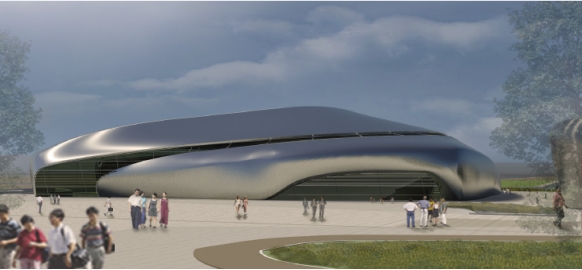
Figure 3 Rendering of the Sports Centre's Exterior Facade
(3) Training Hall:
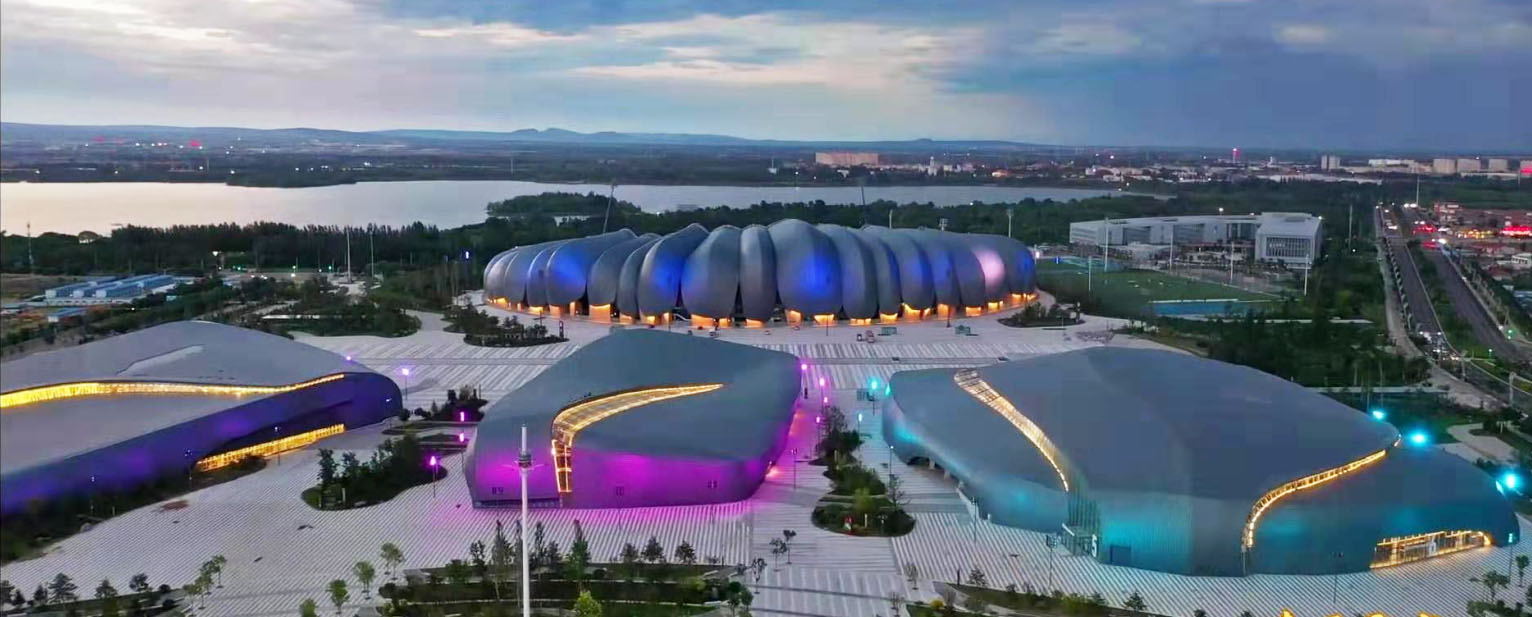
The training hall at Datong Sports Centre is situated on the ground floor. Its structural form comprises steel framework and reinforced concrete frame construction. The design fully accommodates athletes' fluid horizontal and vertical movements. With a total floor area of 7,525m² and a building height of 33.5m, it comprises two above-ground storeys and features no fixed seating (accommodating 576 movable seats). Access is via the northern entrance or the southern entrance on the podium level, with evacuation facilitated through staircases and direct outdoor exits. The facility connects to the main stadium via an underground passageway. The training zone occupies the central area of the venue, with ancillary facilities situated around the ground floor perimeter and on the south side of the second floor. The facility serves both sports school students for training and the general public for various fitness activities. An aerial view rendering of the training hall is shown in Figure 4.
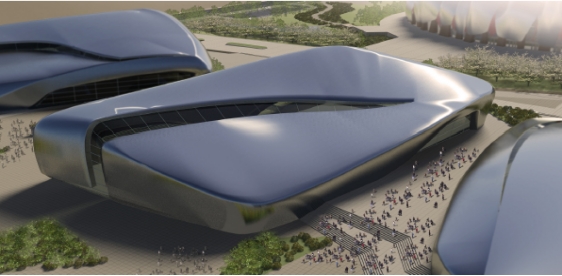
Figure 4 Aerial Plan View of the Training Hall
(IV) Swimming Pool:
The swimming pool features a steel structure and reinforced concrete frame construction, presenting an irregular overall outline with a predominantly rectangular floor plan measuring approximately 160 metres in length and 90 metres in width. The design concept emphasises the powerful movements of aquatic athletes, natural swimming postures, and the muscular strength and distinct contours of the athletes. The total floor area of the swimming pool is 20,325m², with a building height of approximately 27.3m. It comprises three above-ground levels and one basement level, providing a total seating capacity of 1,935. This includes 1,491 fixed seats, 4 accessible seats, 4 companion seats, 400 temporary seats, and 36 VIP seats. An aerial view rendering of the swimming pool is shown in Figure 5.
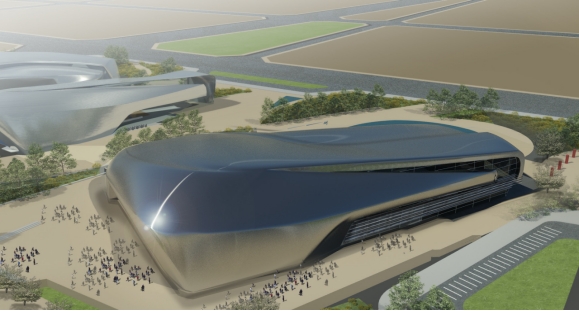
Figure 5 Aerial Plan of the Swimming Pool
II. Construction Philosophy
The Datong Sports Centre is a large-scale integrated facility combining a sports competition centre, sports education facilities, and a public fitness sports park. As a leading sports centre in China and a landmark building for Datong City, its completion showcases the city's spirit of striving for excellence and surpassing expectations through numerous ‘first-class’ standards. The running track, turf, seating, lighting, sound systems, and sports equipment all feature nationally and even globally renowned brands, ensuring reliable quality and performance. The stadium also houses an exceptionally large 19.2m × 9.6m display screen, unmatched in both size and display precision within Datong and its surrounding cities.
The entire sports complex draws its design inspiration from the awe-inspiring natural landscapes of the Loess Plateau. Each major structure embodies strength and grandeur, evoking the distinctive features of the Taihang Mountains to the east, the Lüliang Mountains to the west, and the Hengshan and Wutai Mountains to the north. This reflects Datong's historical significance as a strategic military stronghold across multiple dynasties, alongside its contemporary role as a vital economic hub in mining and finance.